For owners and operators who already bought the AI tools and still can't point to a single dollar they produced.
Most Small Businesses Don't Have An AI Problem.
They Have a Sequencing Problem
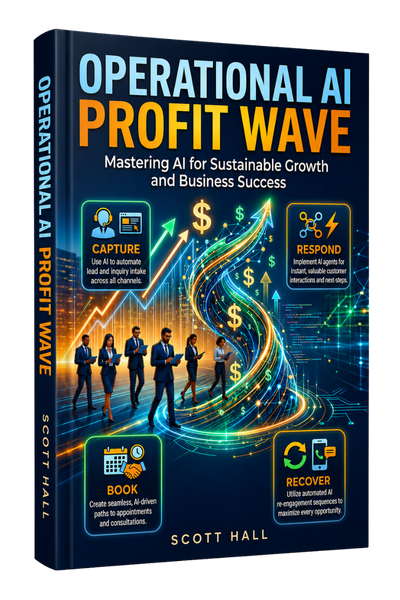
And it's the reason your last three AI experiments quietly died. I spent five years implementing AI and deep learning models inside two of the world's top five wealth management firms. This is the 219-page field manual I wrote for everybody else, plus the AI Profit Gap calculator that tells you whether what you've already built is working.
Includes the book, Profit Gap Calculator, and 3 bonuses. Instant digital access.
From the desk of Scott Hall — Sea Girt, New Jersey
I'm going to start by telling you something that costs me money.
The AI tools you've already bought probably work fine.
That's not what I'm supposed to say. I'm supposed to tell you that you picked the wrong software, and that if you'd only used my recommended stack, you'd be printing money by now.
But I've been implementing this technology inside Fortune 500 environments since before most of today's AI gurus finished high school. And I can tell you the tools are rarely the problem.
The order is the problem.
Here's what that looks like in practice. Alex took over his family's furniture manufacturing business that had 42 employees, decent books, and no idea what any of it meant. The company spent $78,000 on a new production management system that was going to revolutionize operations.
Six months later, nobody in the building could say whether it had improved anything.
Not "it failed." Not "it worked." Nobody could tell. The employees had opinions. The financials were murky. Seventy-eight thousand dollars had left the building and no one could point to what came back.
That's not from technology failure. That's a sequencing failure. Alex automated before he measured, and measurement after the fact is archaeology, not management.
I've watched this same movie play out in bakeries, plumbing companies, bookstores, design studios, and landscaping outfits. Different industries, identical mistake: buy the tool, then figure out the problem.
It never works. Not because AI is overhyped — because it isn't. It's because you cannot automate your way out of a process you haven't diagnosed.
Here's what changes everything.
AI implementation is not a menu. It is a sequence.
If you automate the wrong process first, you waste money. If you connect the wrong data, you create risk. If you scale before you measure, you build chaos faster.
Get the sequence right, and the exact same tools that produced nothing last year start producing measurable margin. I've seen it happen enough times that I stopped calling it a coincidence and started calling it a system.
I call it the AI Profit Wave. Five waves, run in order, no skipping.
The AI Profit Wave
Run In Order. No Skipping.
Wave 01
Visibility
See the profit leaks. Before AI can create value, you have to know exactly where value is currently being lost, not where AI is generally useful, but where it solves a real, costly, repeating problem.
Wave 02
Velocity
Remove the friction. This is where AI starts doing visible work — the missed calls, slow responses, dropped follow-ups, and invisible revenue walking out the door.
Wave 03
Validation
Prove the economics. Do not scale what you have not proven. This is the wave everyone skips — and skipping it is why Alex lost $78,000 into a fog.
Wave 04
Multiplication
Scale what works. Take the one thing that produced a result and build it into a repeatable system — across people, customers, security, and capacity.
Wave 05
Dominance
Create competitive separation. Your competitors can copy your tools. They cannot copy an operating model that's been refining itself inside your business for years.
.
That's the spine of the book. Fifteen chapters plus a bonus chapter, each one built on a real business working through a real bottleneck.
Here's some of what you'll find inside
p.. 13
The one question a 19-year-old asked his aunt that cut her bakery's spoilage to a fraction of what it had been — total implementation cost: under $200/month and about ten hours.
Ch. 4
Why Mike's plumbing company lost a $12,000 commercial contract without a single technician making a mistake — and the friction point that caused it.
Ch. 6
The diagnostic question that separates a staffing problem from an operating system problem. Most owners get this backwards and hire their way into a deeper hole.
Ch. 7
Rachel's bakery was busier than it had ever been — and lost money three months running. She didn't find out until the damage was done. The reporting gap that hides this from you.
Ch. 8
What James saw when he watched customers photograph books on his own shelves, then order them from Amazon while still standing in his store — and the relationship equity he never used.
Ch. 10
The AI ROI Snapshot — run it on every initiative you've already built, before you spend another dollar. This one exercise usually pays for the book several hundred times over.
p. 57
Sophia was burning $2,000 a month on marketing that felt like a black hole. It was not a budget problem — page 57 names what it actually was.
Ch. 11
Why AI can scale bad judgment in hiring — and the thing you must define before you automate any part of recruiting.
Ch. 14
The Four Scaling Constraints — demand, delivery, decision, experience. Identify which one is actually capping your growth before you invest in fixing the wrong one.
Ch. 9
Thomas spent weeks on designs, then rebuilt them from near-scratch three times per client. The development process flaw underneath it.
Ch. 11
Maria inherited 43% annual turnover and a talent strategy stuck in 1995 — the sequence that fixed it.
Ch. 13
The security posture Sophia's manufacturing company was actually running: crossing their fingers and hoping hackers went after bigger targets. How AI risk sneaks in through convenience, not attack.
Ch. 12
Miguel's outdoor gear company was paying more to acquire a customer than that customer was worth over their entire relationship. No volume of new customers can fix that math.
Ch. 15
Mia lost two major projects in one month: one to a studio that was more human, one to a competitor that was more automated. The third way she built instead.
Ch. 1
Five myths that keep small businesses frozen — including the one about needing a technical team, which stopped being true roughly the moment you stopped believing it.
BONUS
Getting your employees to use AI with actual enthusiasm. Every initiative in this book can be quietly killed by people who work around it — most AI projects die before the 90-day mark for exactly this reason.
The Bonus Stack
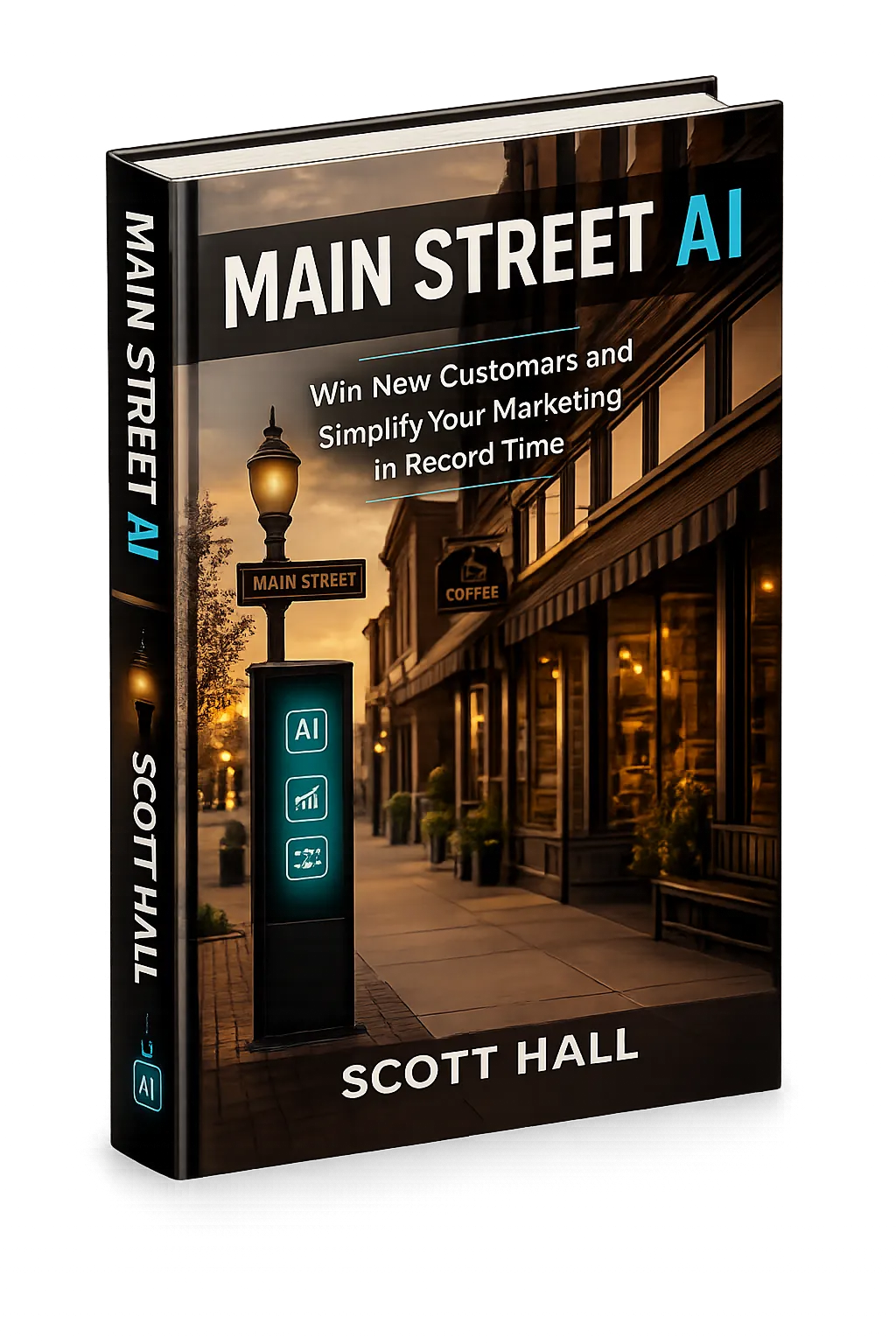
Main Street AI — Resource Guide
Win new customers and simplify your marketing in record time — a resource guide for putting AI to work on everyday local-business marketing, from foot traffic to follow-up.
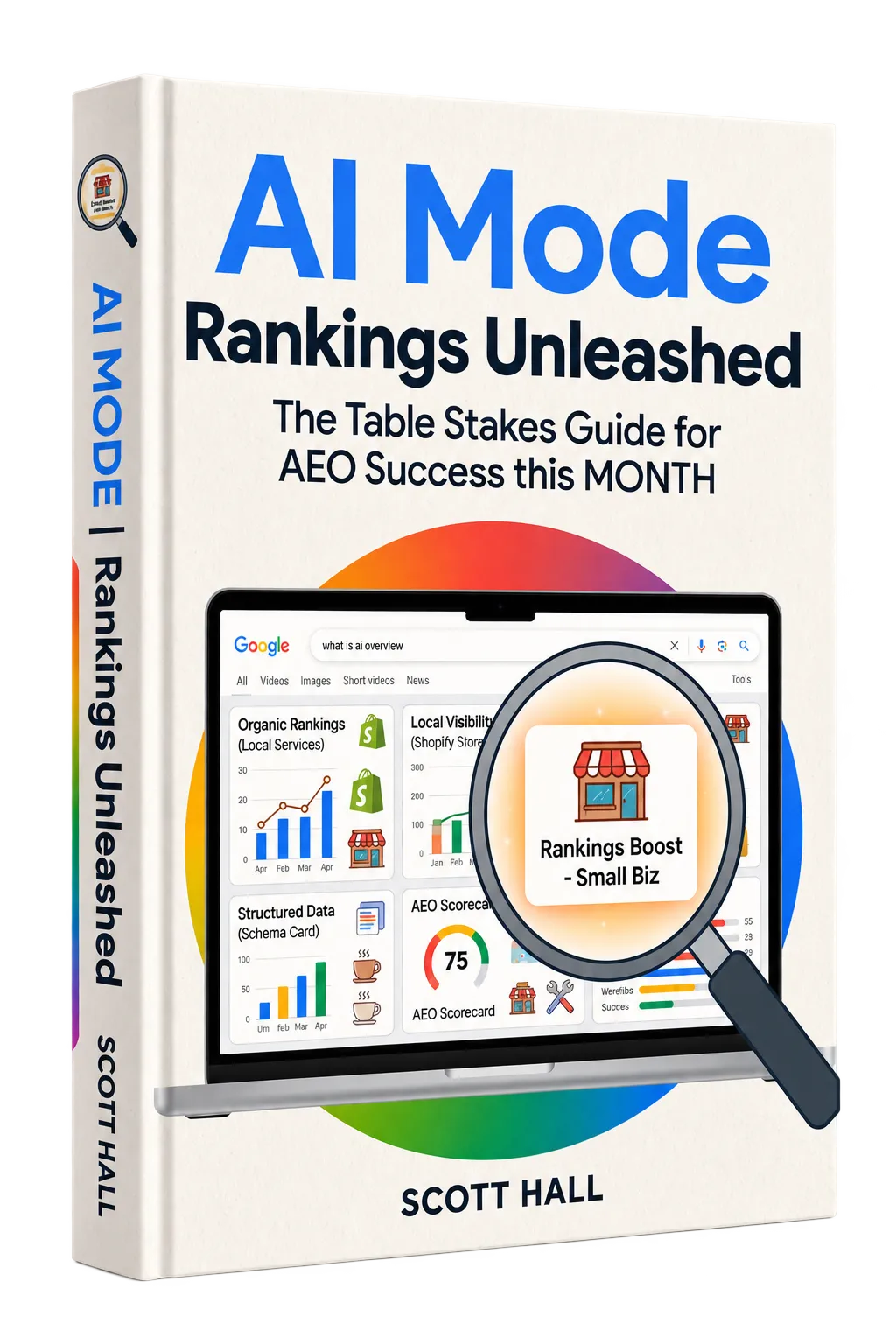
AI Mode Rankings — 2026 Edition
A large share of websites are accidentally blocking AI crawlers — through hosting defaults, not any decision anyone made. This is the fix, step by step: how to check, which bots to allow, and how to structure content so AI engines can cite you. New: a Foreword on the /llms.txt standard.
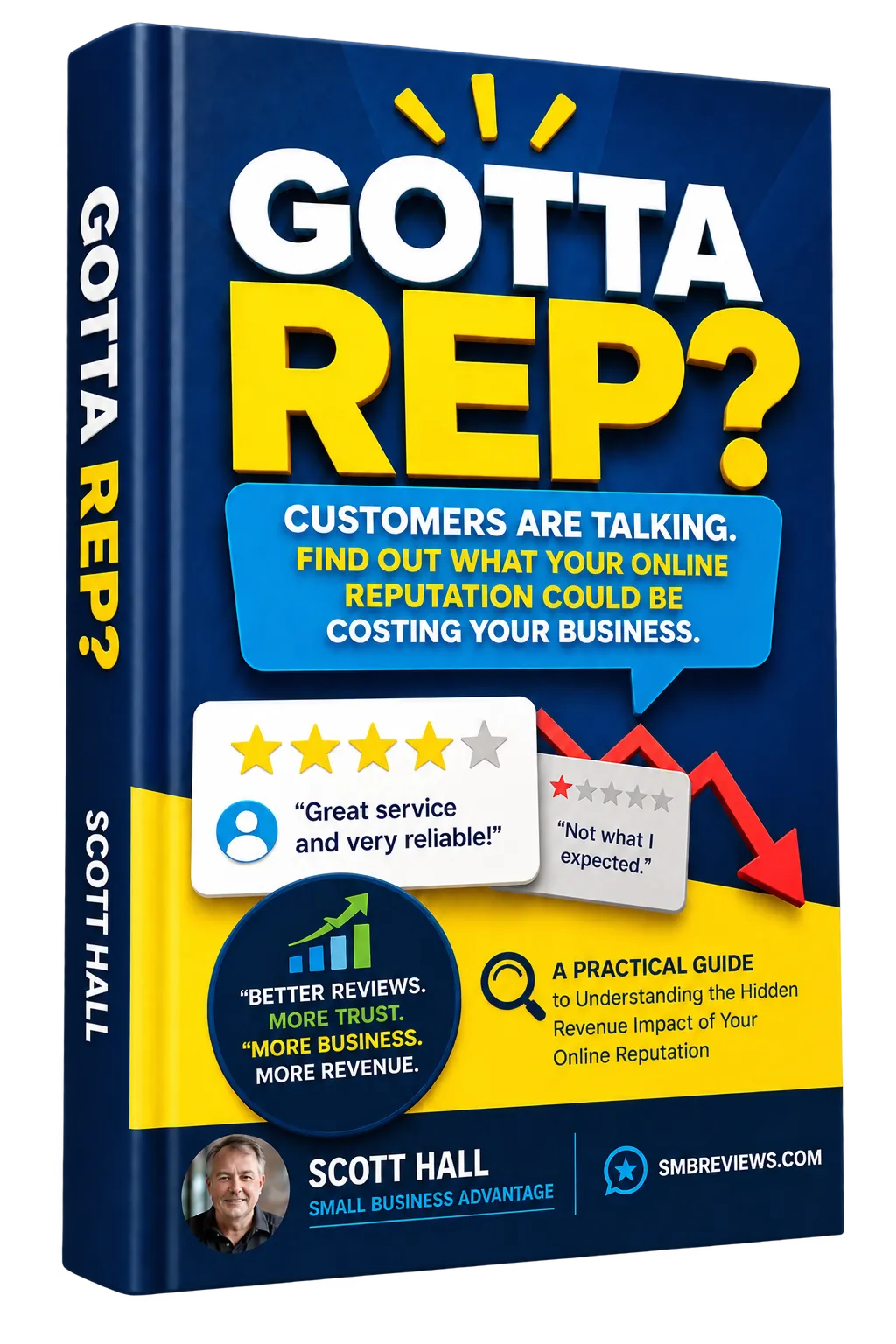
Gotta Rep? Clients Are Talking
Your reputation is a revenue line — it just isn't on any statement you look at. This report puts a number on what the gap between your review profile and your competitors' is costing you in lost inquiries, close rate, and pricing power, and what to do about it in 30 days.

Operational AI Profit Gap Calculator
Missed calls, slow follow-up, forgotten customers, unsold quotes, no-shows. Each one is quietly draining profit from your business. Answer a few quick questions and see the real number. Takes 60 seconds.
Here's Everything You Get
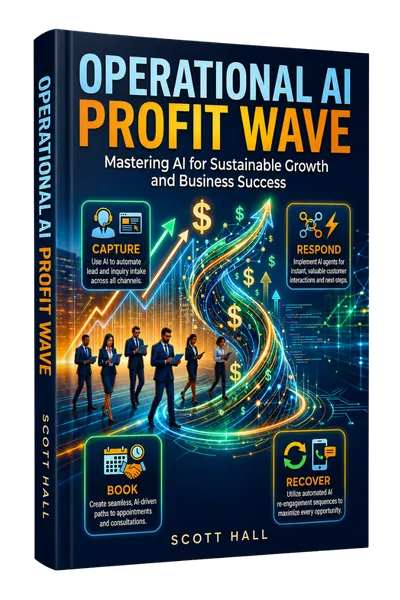
Operational AI Profit Wave 219-page field manual (instant PDF)
$47
Operational AI Profit Gap Calculator
$97
AI Mode Rankings — 2026 Updated Edition
$49
Gotta Rep? — Special Report
$39
Main Street AI — Resource Guide
$47
TOTAL VALUE
$259
Your Price Today
$27
Instant download — everything is in your inbox in under sixty seconds.
Let me be straight about why the price is what it is, because you've seen this model before and you're right to be a little suspicious of it.
I run an AI advisory and implementation practice. The businesses I work with are, without exception, businesses that already understand the sequencing problem before we ever talk. Explaining it on a sales call is expensive. Explaining it in a book is cheap.
So this is the least expensive way I've found to start a real conversation with the right kind of owner. If you read it, implement it yourself, and I never hear from you again, that's a completely fine outcome. It works on its own.
And if you run the Hidden Profits calculator, and your business is losing money you can't see and you think, "I want help running this properly", you'll know exactly where to find me.
That's the whole arrangement. No trick.
TRY IT RISK FREE
My Guarantee
Here's my guarantee, and it's an unusual one.
Read the book. If you get to the end of Chapter 3 - the assessment chapter, roughly 45 pages in, and you haven't identified at least one process in your business costing you real money every single week, email me and I'll refund every cent.
Keep all of it. The book, the calculator, both bonuses. I'm not going to ask you to delete files.
I'm making that guarantee because I've watched hundreds of owners run the Chapter 3 assessment, and I have never once seen someone finish it without finding something.
30 days. No form, no hoops, no exit survey. One email.
Here's Exactly What to Do Next
1
Click the button below
2
Enter your name, email, and card details on the next page
3
Everything downloads immediately and lands in your inbox as backup
Ready to get started?
One last thing.
When you read this, do the one thing I ask in the introduction: mark every process where you think this is costing you money every week.
Those aren't notes. That's your AI roadmap. It's the same document I'd build with you if you hired me, and you can build the first draft of it yourself this afternoon.
Keep building,
Scott Hall
Author, Operational AI Profit Wave

P.S. There's a detail in Chapter 1 I keep coming back to. JP Morgan Chase now requires every single employee to learn prompt engineering. Not the tech team. Everyone. Meanwhile my own testing shows that in the niches I work in, north of 90% of small businesses aren't using AI in any operational way at all.
That gap is the entire opportunity, and it is closing. Not in a decade but in this business cycle. The window where these tools are accessible but not yet universal is the only window where they produce competitive advantage instead of table stakes.